Favourite Summer Salad

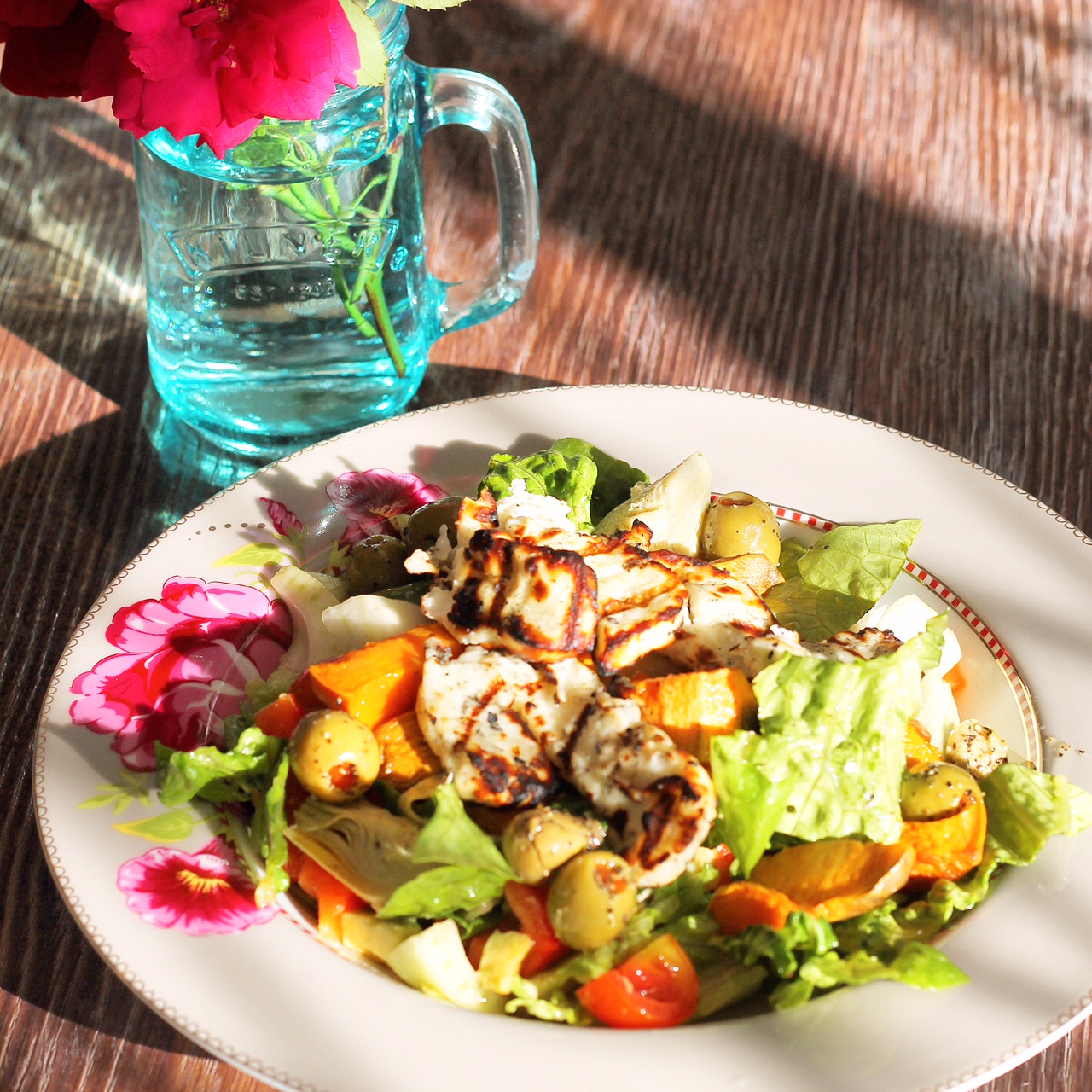
Sweet pot salad 1

This is my ultimate go-to summer salad. It’s so easy and quick to make and works so well as a yummy, filling, nutritious meal to eat out in the garden on a warm evening. You can omit the halloumi if you are vegan, and you don’t have to stick to this recipe, you can add any vegetables you like.

Ingredients

3 sweet potatoes, peeled and chopped in bite sizes
1 block of organic High Weald halloumi, sliced
About 6 romaine lettuce leaves, chopped
10 cherry tomatoes, sliced in 4
1 red pepper, chopped
2 mini cucumbers, chopped
2 spring onions, chopped
Handful of olives of your choice
Small tin of artichoke hearts
Extra virgin olive oil
Himalayan or Oryx desert salt

Sweet pot salad 2

Method

Preheat oven to 180 degrees while you peel and chop the sweet potatoes. Put them on a baking tray covering with baking paper, drizzle with olive oil and sprinkle with salt. Mix them around the tray until they are all covered in the oil then place in the oven for around 30 minutes.

Prepare the rest of your veg and add to a bowl then drizzle with a little olive oil, salt and pepper (you can add lemon here if you like it) and mix well.

Place the halloumi under the grill or on the BBQ (we love it on the BBQ) and grill until nicely charred.

Remove the potatoes from the oven and place on top of the salad, then remove the halloumi from the grill or BBQ and place on top. Serve immediately.

Enjoy!

Love,
Lauren

Vegan White Chocolate Cookies

White choc cookies 1

Pregnancy cravings have struck! I am craving cookies and biscuits like never before, especially in the afternoon. I’ve given in and had a few ‘naughty’ Belgian chocolate covered biscuits because I don’t agree with depriving yourself to the point of being miserable. I’d say that my healthy lifestyle makes up for 80% of the time, and the other 20% is when I eat out or at other people’s houses or fancy a treat. I don’t want to be the person who goes out for dinner and can’t have anything on the menu. Since cleansing myself and getting into remission, I no longer have any intolerances so my body accepts everything, I just don’t agree with eating all that unhealthy stuff all the time. But every now and then, if I fancy a biscuit, I have it! That being said, the cravings have got a bit mad so I had to make some healthy ones to keep at home and these really do satisfy the craving 🙂

Ingredients

1 can chickpeas, rinsed then patted dry
2 tbsp organic natural peanut butter (I use Meridian)
3 tbsp almond milk
1 tbsp coconut oil
3 tbsp maple
1 tbsp sized chunk of cacao butter
3 tbsp buckwheat flour
1 tbsp coconut palm sugar
1 tsp baking powder
1 tsp bicarbonate of soda (not essential, but I find it gives the outer layer of the cookie a crunchier texture)
Pinch of Himalayan or Oryx salt (I used Oryx desert salt)
Generous handful of vegan white chocolate chips (or any chocolate chips of your choice)

Method

Preheat oven to 180 (gas mark 6) and line a baking tray with baking paper and grease it slightly with coconut oil.

Put the chickpeas, peanut butter, almond milk and coconut oil in a food processor and blend until smooth.

Then add the maple, cacao butter, buckwheat flour, coco sugar, baking powder, bicarb and salt and process again until smooth and sticky.

Transfer the mixture to a bowl and add the chocolate chips and mix in.

Take cookie sized balls of the mixture in your hand, roll then press down to a cookie shape on the prepared baking tray. Dampen your hands slightly if it is too sticky. Repeat until mixture is finished.

Put in the oven for 12-15 minutes or until you see they are very slightly golden but do not over bake. They will continue to harden once they come out the oven. Transfer baking sheet that they are on, onto a cooling tray or wire rack until fully cooled.

Served best with a cold glass of almond milk!

Enjoy!

Love,
Lauren

Paleo Brownies

Paleo Brownies

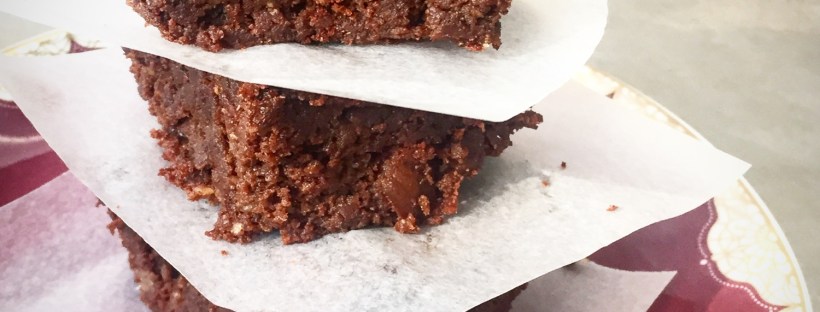
These brownies are gluten- and grain-free, and by using stevia and only a small amount of honey to sweeten they are very low in carbs too. The use of almonds, flax, egg and avo means that they’re a decent source of protein; and the coconut oil, along with the flax, is great for controlling cholesterol. A truly guilt-free treat!

Ingredients

65g raw cacao paste
80g organic virgin coconut oil
60ml raw almond butter
60ml raw honey
2 eggs
1/2 cup ripe avo
2 tsp vanilla extract or 1 tsp vanilla powder
1 cup ground almonds
60ml ground flax seed
1 tsp stevia powder
1 tsp ground cinnamon
a pinch of Oryx Desert Salt
1 tsp aluminium-free baking powder
1/4 cup chopped raw pecan nuts

Method

Preheat the oven to 180C and grease a square baking dish with coconut oil.

Place the cacao paste, coconut oil, almond butter and honey in a glass or steel bowl which can fit over a saucepan. Fill the saucepan with water and bring to a simmer. Place the bowl over the saucepan, gently melting the ingredients.

Mash the avo with a fork until smooth. Whisk the egg and vanilla, and combine with the avo. Set aside.

Combine the ground almonds, ground flax, stevia, cinnamon, salt and baking powder. Set aside.

Once the chocolate mixture is completely melted and whisked together, slowly pour it into the egg mixture whilst whisking vigorously, to prevent the heat from scrambling the egg. Stir in the dry ingredients and the chopped pecans.

Spread the batter into the baking dish and bake for about 20 – 25 minutes. Allow to cool before cutting into squares.

Health & happiness!

Love,
Raine

Double Chocolate Cookies

Double Chocolate Cookies

It’s tough being pregnant and health-conscious! But what time could be more important than now to watch what I eat? The growth and health of my baby is solely dependent on me – that’s a lot of pressure! So I need to make sure I’m consuming only the healthiest, most nutritious organic produce but that’s not always easy; as we know, everything healthy takes preparation. I must admit, I have succumbed to the odd store-bought chocolate biscuit over the last few weeks as the serious chocolate cravings hit, but I try to make a batch of something sweet yet healthy once a week or once a fortnight so I have stuff on hand.

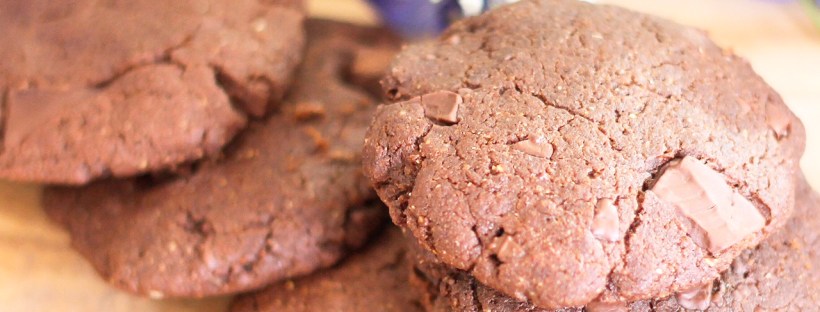
Today we looked after our 18 month old niece (good practice!) and while she had her afternoon nap I whipped up these bad boys, adapting from a recipe by Wholesome Patisserie. Not only did they 100% fully satisfy my craving (and I’m not lying, they really did – even more so than the store-bought processed stuff!) but my niece loved them too and we got to have them warm out the oven when she woke up. That’s what I call Sunday afternoon bliss! I hope you like them as much as we all did 🙂

Ingredients

Wet Ingredients:
1 heaped tbsp ground flax seeds
1/4 cup coconut oil
1/4 cup almond butter
1 and quarter cups coconut palm sugar
1 tsp vanilla bean paste

Dry Ingredients:
1/2 tsp baking powder
1/2 tsp bicarbonate of soda
1/4 tsp Himalayan or Oryx salt
3 heaped tbsp raw cacao powder
1 1/2 cups buckwheat flour
2 tsp almond milk
Half cup dairy free (or your choice of) chocolate chips

Method

Preheat oven to 180 and line 2 baking trays with parchment paper.

In a large mixing bowl, mix together the ground flax and 3 tbsp filtered water and set aside for 2-3 minutes or until it has thickened up. Then whisk the flax egg one final time.

Now add the wet ingredients to the same bowl with the flax egg; solid coconut oil, almond butter, brown sugar, coconut sugar and vanilla. Beat the mixture until smooth and well combined.

Add in the baking soda, baking powder, salt and cacao, beat the mixture well. You may have to knead a bit with your hands to get it fully incorporated, then beat or knead in the buckwheat flour with the almond milk until smooth and well combined.

Now mix in the chocolate chips.

Take a small piece in your hands and roll into a ball then flatten into a cookie shape and place on prepared baking tray. Make sure to leave enough room between each cookie as they will rise.

Put them in the oven for 12-15 minutes then remove them and leave to cool on a cooling rack for 5 minutes. After that you can either eat them warm or wait until fully cooled before storing them in an airtight container.

Enjoy the decadence!

Love,
Lauren

MTHFR – The Gene Mutation That Could Damage Your Unborn Baby

pregnant

I owe a lot to my pregnancy, it revealed the final missing piece in my perennial search for answers to questions about my health and for that I am eternally grateful. I should be even more grateful, though, to Jessica, a lady in Florida who told me about the gene mutation, MTHFR.

If you are pregnant, a parent, planning on having children or have stomach issues, allergies, autoimmune or other ‘unexplained’ health problems that continually persist, despite your best efforts, I urge you to read on, despite the length of this post. It has taken me thirty-one years to figure out what I am about to tell you, and it has changed not just my life for the better, but that of my unborn baby, too.

I came across this invaluable information during my own quest for remission of Juvenile Rheumatoid Arthritis, which I was diagnosed with when I was two. Thankfully, through my own stubbornness and determination to not spend my life being disabled, I finally conquered the disease for good, through diet, a range of complementary therapies including homeopathy, naturopathy and kinesiology, and an extensive understanding about the human body, despite never having ‘actually’ studied, and I have been in remission for two years.

In order to understand fully what MTHFR entails, it means being able to understand complex biochemistry, which I’m assuming, like me, most people reading this will not be overly familiar with. So I will explain it in simple terms;

What Is MTHFR?
The MTHFR mutation inhibits the body’s ability to methylate, or convert folic acid into Methylfolate. Methylfolate is the active and usable form of folic acid – which is why it is more sensible to take it in the form of Methylfolate in the first place, especially if you are pregnant, as opposed to taking the synthetic version of folic acid. The body also finds it hard to process vitamin B12 and other vitamins, and instead, the liver converts them into toxins.

The body is constantly taking in toxins, but the liver of a healthy person will be able to detoxify and release these toxins. When you have MTHFR, the toxins get trapped and will continue to build up over the years, causing a slew of different illnesses. This suppression of toxins could show itself in any way from persistent headaches or migraines, unexplained allergies, autoimmune issues, low immunity, gastrointestinal problems (which, after every test under the sun would probably have been labelled as IBS), Fibromyalgia, Chronic Fatigue Syndrome, deficiencies, hormone problems and a myriad other ailments.

You can have the Homozygous gene or the Heterozygous gene. Homozygous is the worst one; it means your body converts 70% of these nutrients into toxins. Luckily for me, I have the heterozygous gene, which means that my body processes 30% into toxins and before I explain what this means for me and my baby, I’ll explain first how I found this out.

Research
This lady in Florida, Jessica, is the mother of a little girl with juvenile rheumatoid arthritis whom I have been in touch with for a few years. She also decided to go down the complementary medicine route and thankfully, like me, her little girl is now doing really well. Jessica found out that she had the MTHFR gene mutation, and, unfortunately for her, she had the worst kind. She realised that this gene mutation in her was probably the reason why her daughter got autoimmune arthritis. For years she urged me to have the blood test but I kept putting it off because there was always something else to contend with.

But then I had to have IVF. When I (thankfully) got pregnant, I noticed that the blood form at my IVF clinic had an option to test for MTHFR. I had to pay extra for it, but I decided it was the perfect opportunity to have the test. Ten days later it came back positive. Now, had I not have spoken to Jessica, I would never have known what MTHFR was and I would have totally overlooked it on the sheet of paper. More than that, not one doctor in all my life had ever advised me to have the test.

Bad Advice
My doctor, who told me that the test was positive, prescribed folic acid in very high doses. ‘If you have MTHFR’, she said, ‘your body doesn’t absorb as much folic acid so you need more.’ This was their understanding and the extent of their understanding of the gene mutation ended there.

My history of illness and subsequent self-acquired remission of course encouraged me to look elsewhere and get information from a more reliable source and not simply walk out of the clinic accepting that ‘the doctor must know everything and I don’t need to think about this anymore’. Doctors, we must remember, are humans, just like us, and despite their panoply of knowledge and accomplishments, they can’t possibly specialise in everything so we cannot and must not assume that they can know the answers to every last medical problem. We have a responsibility to ourselves and must take responsibility for our own bodies. (If we all did this, we would help relieve pressure on the NHS drastically, but this is another story altogether.) I was in early stages of pregnancy, it was my first baby, I was worried and determined to understand everything I needed to about what this meant for me and my baby. I spoke to Jessica and she led me to the website of Dr Ben Lynch, the primary resource for everything MTHFR-related. He is based in the States but recommends specialists for MTHFR all over the world. It turns out there were only three in the UK and only one in London. I got in touch with him and had two phone consultations and, between him, Dr Lynch, Jessica and other research I did, this is what I learnt…

What It Means For My Baby
My body cannot absorb many nutrients, but two of the most important ones (for right now anyway) are folic acid and vitamin B12. That being said, ‘folic acid’ in the way we know it, is synthetic. It is folate we need, and in higher quantities when we are pregnant in order for the baby to develop.

Folate is found in plenty of foods but we don’t eat enough of those foods anymore so ‘folic acid’ was created. My body cannot absorb this synthetic form of it. Not only can it not absorb it, but my liver turns it toxic, leaving me feeling ill (and probably never knowing why) and meaning that my baby is not receiving crucial nutrients at a critical time. In order for my body to be able to absorb folate properly and process it in a way that it gets fed through to the baby, it needs to be in the form of Methylfolate, the primary biologically active form of folic acid used at the cellular level for DNA reproduction.

Because I had done a lot of research prior to falling pregnant, I already knew that Methylfolate was the healthier way of taking folic acid (even though I knew nothing about methylation at the time), so luckily for me, my prenatal supplement was already in the form of Methylfolate and my B12 was in the form of Methylcobalamin. I learned about the B12 side of things when my arthritis pain got so bad that it started affecting the nerves. Once I made the decision to heal myself, I did research into B12 and realised my body wasn’t absorbing it properly but I never knew why, so I got Methylcobalamin, have been taking it ever since, and that pain went away almost instantly. Obviously I never fully understood why until now.

I was six weeks pregnant when I found this out so I was pretty lucky that I’d already been taking this prenatal supplement but the MTHFR specialist recommended a different brand and I have been on that ever since.

My obstetrician, just like the doctor who gave me the MTHFR blood results, knew nothing about MTHFR other than that it meant that I ‘needed higher doses of folic acid’. In my experience, doctors do not like to be told what they don’t know by their patients, but my lovely obstetrician listened, seemed shocked, and thanked me for passing on information that he didn’t know. He said it could help many women who came his way and that he was going to go off and do some research on it. (EDIT: 2.5 years later, he still has not done anything about it). He said that the MTHFR could leave my baby susceptible to miscarriage, a brain defect, and spina bifida. By the time I saw him I was ten weeks pregnant and at that scan he ruled out the brain defect but said that the other two were still possible and had to be ruled out at different stages, the last one at sixteen weeks.

I am now twenty-one weeks pregnant and have surmised that the reason that all these things have now (thank God) been ruled out, is because my body got the right nutrients it needed in the right forms. My baby was not susceptible to spina bifida because he received the folate he needed. The reason most women in my situation would still be at risk of that is because they would still be taking the synthetic folic acid without knowing that despite their best efforts of taking this, the baby was not receiving it and was therefore at risk of these awful conditions. (EDIT: My baby is now 21 months old and thank God healthy.)

Miscarriage
MTHFR is responsible for a HUGE number – though we don’t know how many – of miscarriages. If your OB tells you that there is no evidence linking these 2 things, it is because your OB is not educated on MTHFR. (Please have a look at the information by Dr Ben Lynch in the link embedded at the beginning of this paragraph.) This is a massive deal. We know that women are miscarrying because they have this gene mutation and don’t know about it or how to treat it, and doctors don’t know either. So if you are reading this and have had miscarriages for ‘unknown’ reasons, it could be that you have MTHFR. And let me tell you, with a little bit of research and lifestyle-tweaking, it really isn’t that hard to stop this being the cause of your miscarriages. What sort of relief would that be!

A study published on US National Library of Medicine and National Institute of Health stated that ‘We provide evidence to support the relationship between MTHFR C677T mutations and recurrent fetal loss.’

This study shows the clear link between MTHFR and recurrent miscarriage but simply advises anticoagulation meds as a possible solution as opposed to methylfolate and healthy lifestyle. Each of the 8 women in the study was found to be positive for MTHFR, 7 homozygous and 1 heterozygous, which concludes that heterozygous women need to be treated in the same was as homozygous. It shows a link between MTHFR and preeclampsia, intrauterine growth retardation, placental abruption and neural tube defects. Therefore this is not just about miscarriage but complications in pregnancy, too. Fertility clinics who have had successful pregnancies, along with GPs, midwives, OBs and GYNs should be testing all women for MTHFR and advising them against synthetic folic acid and prescribing a healthy, bioavailable source of methylfolate instead, and should be monitoring the pregnancy and advising on diet. Fertility clinics especially should be prescribing methylfolate as standard.

If your OB is one of those trying to convince you that there is no link between your miscarriages and MTHFR, it could be to do with the fact that some studies found no concrete link. However this is most likely to do with the fact that if someone has MTHFR, they need to be taking the right prenatal supplements during the study. If a study was run whereby it was documented which out of the women was taking methylfolate and methylcobalamin, coupled with a healthy lifestyle low in toxin exposure, and which women were continuing with synthetic folic acid and did not do anything to support the mutation, it is highly likely that we would see the link very quickly.

Missing Pieces
In terms of the missing pieces in my own life, the time of my diagnosis was when they all started fitting together: my mum must have this mutation or at least be a carrier for it, and because she didn’t know about it she took folic acid. She didn’t miscarry and I didn’t have spina bifida, but it severely affected my immune system, which, of course, was another thing she would not have known about when I was born. So, I already had low immunity (which was unknown at the time), and then I had the Measles / Rubella vaccine and immediately after that the swelling in my ankles appeared and a few months later (a month before my second birthday) I was diagnosed with Juvenile Rheumatoid (Idiopathic, as it was then known) Arthritis, which I subsequently had for the rest of my life. The vaccine was too strong and filled with too many toxins for an underdeveloped and very lacking immune system to handle so the susceptibility in that immune system just needed a trigger. Although I got myself into remission, it is only now that all the pieces fit together but I am so glad I know this. Not only does it confirm my belief that nothing is ‘idiopathic’ (no defined cause) and that everything has a root cause or a reason for happening, it also means I can now make sure that I give my baby the very best chance at staying healthy.

Summary
It is thought that an estimated 60% of the population have this gene mutation, but most don’t even know about it. 60%! That’s huge! So why isn’t it spoken about more? Why have we never heard of it? Why do doctors not know about it? And if they don’t know enough about it, why are they prescribing anything at all? Taking folic acid in its synthetic form is highly dangerous if you have MTHFR. We need to be aware of this but our healthcare professionals also need to be aware of it. How would the average person know to look out for it if the people we trust with our healthcare have no idea about it? Fertility doctors, obstetricians and midwifes especially need to be educated on this subject.

Knowledge is power and we must stop being complacent with ourselves and with our children and know that we are allowed to – and should! – research, that the doctors can’t know everything and that we need to figure stuff out for ourselves. If doctors don’t know much about MTHFR, how many other conditions are leading to our decline in health that they don’t know about?

If 60% of people have this gene mutation, you could be one of them, so I hope this article encourages you to get the test, if not for yourself then for your children. Imagine if this gene mutation is the reason behind so many of us having such a range of illnesses and ailments, all because our bodies can’t detoxify.

And even if you don’t have the test, perhaps you will take away from this the knowledge that there is a reason and a trigger for every illness or ailment and we can access that reason and fix it before it’s too late. If you are pregnant – or planning – and even if you don’t plan on getting the MTHFR test, consider taking folate in the form of Methylfolate instead of synthetic folic acid.

I hope that by writing this article, I can help some people avoid the unthinkable.

Love & health,
Lauren Vaknine

The prenatal supplement I take is called Optimal Prenatal by Seeking Health and can be purchased at www.functionalutritionsupplements.co.uk

For more information about MTHFR please visit Dr Ben Lynch’s website.

For more information about my story and subsequent remission, you can purchase my book, ‘My Enemy, My Friend’ on Amazon.

Easy Cheesy Green Pasta

Green Cheesy Pasta

I’m always looking for new dinner ideas – preferably ones that don’t take hours and are healthy and I got this idea from my Abel & Cole organic fruit and veg box and it’s the perfect veggie dinner option for the whole family, I guarantee they’ll all love it! I am using cheese in this recipe when we very rarely add dairy to our recipes. I get high quality, organic cheese and, if you’ve read our article about dairy, you’ll see that we strongly suggest limiting the consumption of cow’s milk products to once a week. During my pregnancy, I have chosen to have cow’s milk products once or twice a week. That way I am limiting my intake to ensure my gut and immune system stay strong (of course with the help of probiotics), but I am also not cutting it out totally, leaving the baby susceptible to intolerances when he / she is born.

Ingredients

Enough brown rice pasta for however many people you’re serving
Extra virgin olive oil
Handful of almonds, roughly chopped
2 cloves garlic, minced
1 cup breadcrumbs (or a gluten free alternative)
1 head of broccoli
5 leaves of spring greens
3 small leeks or 1 large
150-200ml almond milk
Some grated mozzarella
A sprinkle of nutmeg
A pinch of chilli flakes
Oryx or Himalayan salt and ground black pepper

Method

In a frying pan, gently toast the almonds until just coloured. This should make your kitchen smell amazing! Put into a bowl and set aside.

Put the pan back on the heat and add a splash of olive oil, then the minced garlic, followed by the breadcrumbs and stir until golden. Set aside in a separate dish.

Cook the pasta as per packet instructions.

Put the pan back on the heat with a little more olive oil and add the broccoli and stir around for a few minutes before adding the greens and leeks. Cook these until they start colouring, then add a couple of tablespoons of water to help steam the broccoli. Add some salt and pepper and cook until the broccoli looks slightly coloured but crisp and not soggy.

Drain the pasta and leave in the colander then add the almond milk to the saucepan and gently heat. Add the nutmeg, then put the pasta back in, along with the vegetables, followed by the almonds, then add the mozzarella (gauge how much you need for it to melt and not be too sickly).  Stir everything really well.

You can either add the breadcrumb mix now and stir a little, or you can serve up the pasta into bowls and top them with the breadcrumb mix.

Serve immediately – it will be devoured!

Enjoy!

Love,
Lauren

Fig, Berry and Coconut Cake

IMG_0938

I love fresh figs, and they’re even better roasted with a bit of honey. This cake is very simple and quick to make, as well as being wheat-free, dairy-free and refined sugar-free. Perfect for afternoon tea 🙂

Ingredients

60ml raw honey, plus a little extra
60ml organic coconut blossom sugar
125ml organic virgin coconut oil
2 free-range eggs
1/2 tsp organic vanilla extract
1/4 tsp Oryx Desert Salt
2 tbsp acaì powder
2 tbsp tapioca starch
1 cup organic or homemade coconut flour
1 tsp aluminium-free baking powder
1/2 cup frozen mixed berries
2 large fresh figs

Method

Preheat the oven to 180 C.

Cream the honey, sugar and coconut oil with an electric beater. Add the eggs one at a time while beating. Add the vanilla, salt, acaì powder and tapioca starch and beat well. Add the coconut flour and baking powder, and lastly stir in the berries.

Spread the batter into a 20cm cake tin lined with baking paper or a silicon liner. Cut the figs into quarters lengthways and push them into the batter in a neat circle, with the inside of the fig facing upwards. Drizzle a little honey over the figs.

Bake for about 30 minutes, or until the cake is golden, the figs caramelised and a skewer comes out clean. Leave to cool before turning out.

Health and happiness!

Love,
Raine

Turnip, Apple & Sweet Potato Salad

Turnip Salad

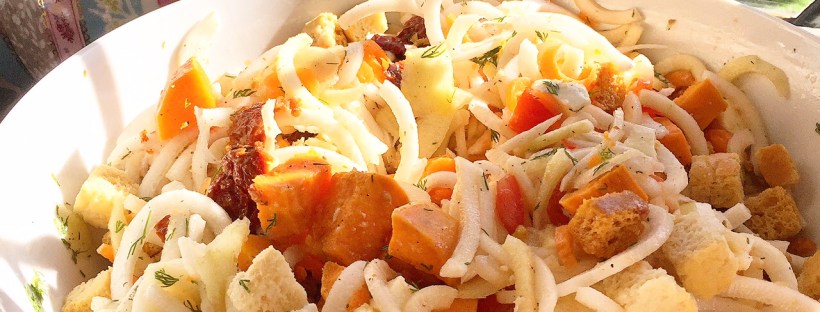
I’ve been getting some interesting fruits and vegetables through in my weekly Abel & Cole organic fruit and veg box now that the summer season is approaching. I truly believe in eating only what is in season, therefore it has no preservatives and can be totally organic so I’m getting excited now that strawberries, blueberries and rhubarbs are coming in! Turnips came in this week’s box and I thought right, it’s getting too warm to make a soup so I’ll make a salad and here is the end result… You don’t need a spiralizer but it will make life easier with this sort of salad and makes it look much nicer too! They’re really not expensive and can be picked up on Amazon for around £25.

Ingredients

3 turnips
4 carrots
2 sweet potatoes
2 apples (any will do, I just used what arrived in my shopping box)
A good handful of sundried tomatoes, chopped into quarters
A handful of dill, finely chopped
Croutons of choice (you can find gluten free ones)
2 Mozzarella balls, sliced (optional. Omit if you want this salad vegan)
Drizzle of apple cider vinegar
Drizzle of olive oil
Juice of 1 lemon
Himalayan salt & black pepper to taste

Method

Start by peeling the sweet potatoes, dicing them into 5mm pieces, then place on an oven tray, drizzle with olive oil and put in the oven on 180 degrees (gas mark 6) for 20 minutes.

While this is cooking, peel the turnips, carrots and apples, then put each one through the spiralizer and add to a big salad bowl then add your dill.

Add the apple cider vinegar, lemon, olive oil, salt and pepper, mix well, then end by adding the sweet potatoes, croutons and mozzarella (if you add these before the dressing they will go soggy).

Mix well and serve straight away with your choice of crackers and homemade hummus.

Enjoy!

Love,
Lauren

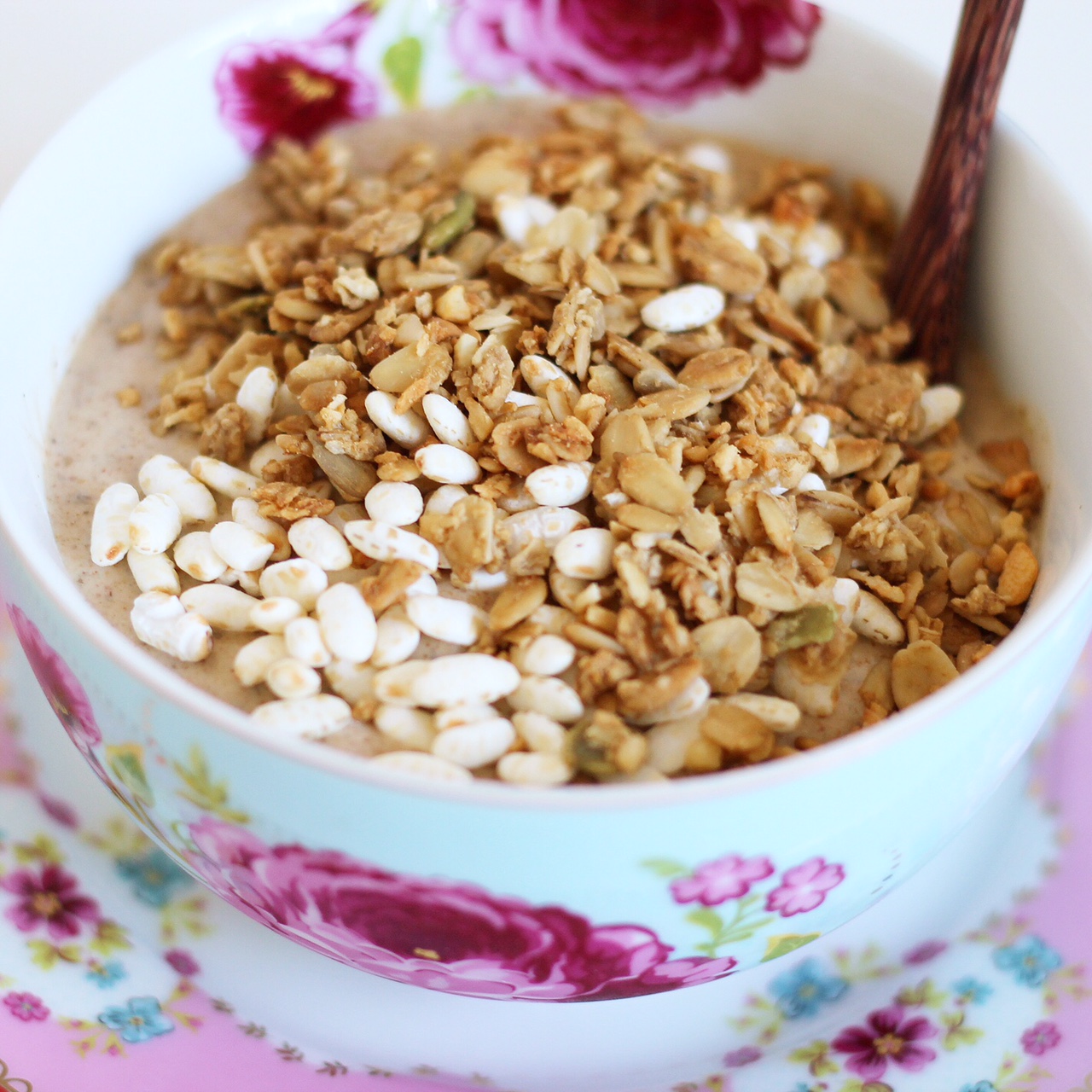
Banana Crunch Smoothie Bowl

Banana Smoothie Bowl

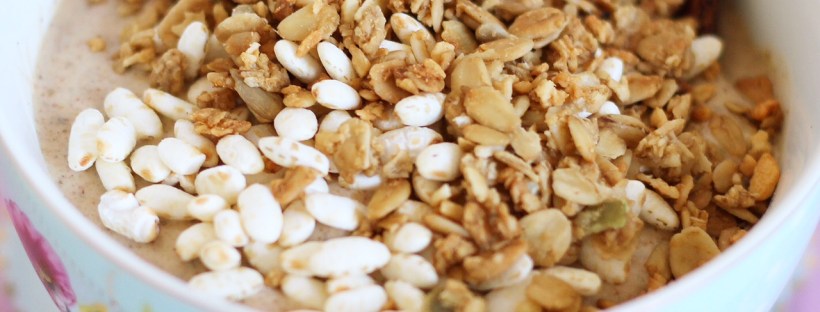
Breakfasts don’t need to be just cereal or toast! I love making up new smoothie ideas for a yummy, filling and nutritious breakfast. Check out our other smoothie bowls on our breakfast page.

Ingredients

1 and a half frozen bananas (slice and freeze the day before)
1 tbsp almond butter
2 medjool dates
Splash of almond milk
Tsp chia seeds
Homemade granola or organic store bought
Some puffed brown rice

Method

Put all the ingredients except the granola and puffed rice into the blender and blend until smooth.

Pour into a bowl and top with the granola and and puffed rice (or puffed quinoa) and enjoy!

Love,
Lauren

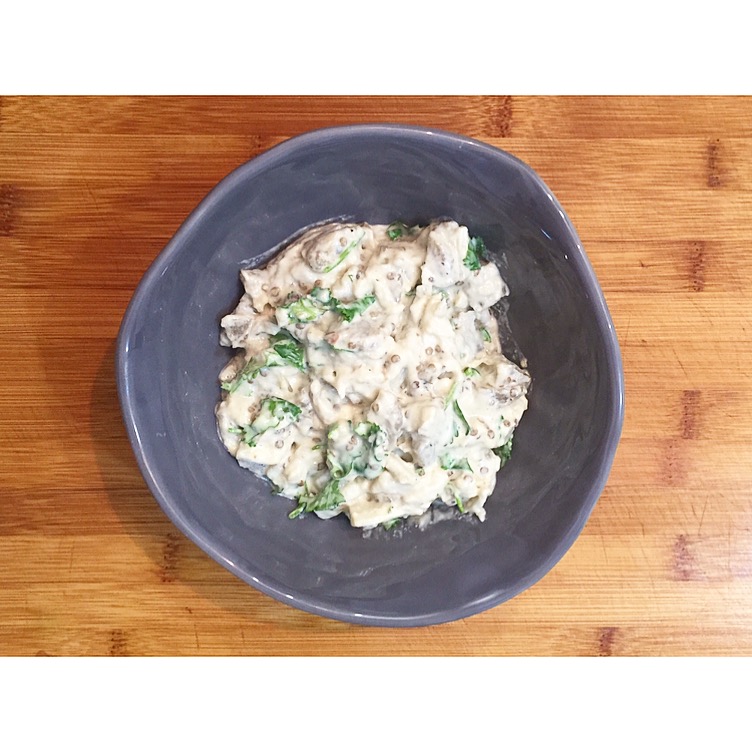
Aubergine & Tahini Dip with Oryx Desert Smoked Salt

Hatzilim im Tchina

This is a very common dip in Israel and I often make it for Shabbat dinner. Traditionally the aubergine will be cooked on an open flame, giving it a smoky flavour. Using Oryx Desert Smoked Salt gives it that same flavour, while simply roasting it in the oven.

Ingredients

1 large aubergine
2 tbsp tahini
juice of 1/2 a lemon, or to taste
1 tbsp extra virgin olive oil
1 clove of garlic, finely minced
1/4 tsp ground cumin
small handful fresh coriander leaves
Oryx Desert Smoked Salt
Black pepper

Method

Heat the oven to 200C.
Pierce the skin of the aubergine with a sharp knife a few times. Place it in the oven, straight on the rack. Roast until the skin is blackened and the interior is soft, about 40 minutes. Remove from the oven and allow to cool.

Remove the skin of the aubergine and chop up the flesh. Combine with the rest of the ingredients, adding the smoked salt and black pepper to taste.

Health & happiness!

Love,
Raine