Homemade Almond Milk

almond-milk

If you would like to read about why dairy is bad for you and why I don’t have it myself and why I don’t give it to my baby, read this article about why dairy is bad for you. I do not recommend replacing dairy with soy, even if you’re buying organic non-GMO soy products. Soy beans naturally contain isoflavones, which function as phytoestrogens. These mimic your body’s own oestrogen, therefore it’s as though you have increased oestrogen production. It’s never a good idea to mess around with your hormones. Furthermore, soy beans may have health benefits in their natural, whole state, but most of the dairy-replacement products made from soy are very processed. My rule of thumb is that processed is bad, and this is the major theory behind the “raw food” and “clean eating” movements. I don’t think that eating organic tofu once in a while will have a bad effect, but for most people whatever they use to replace dairy is something they will be eating every day. So you need to choose something which will contribute to your health, not hinder it!

For me, the best alternative to cow’s milk is almond milk. It’s just so damn yummy! The health benefits of almond milk include improved vision, weight loss, stronger bones and muscles, and a healthy heart. It helps to maintain ideal blood pressure and is good for your kidneys. Almond milk (or any other nut milk) is such a great substitute for cow’s milk that you won’t even miss it. In fact, once you’re used to having nut milk the taste of cow’s milk is quite unpleasant. 

Nut milk is really simple to make, and once it becomes part of your routine, no big deal, you’re ready to move onto the next step of cleaning up your diet 🙂

Ingredients

1 cup raw almonds
water for soaking
900ml purified water
1/4 tsp himalayan salt
1/4 tsp vanilla powder or 1/2 tsp vanilla extract
3 – 4 dried dates, or 1 tbsp raw honey or organic maple syrup

Method

Firstly, soak the almonds in water overnight or minimum 4 hours. Don’t skip this step! Almonds contain an enzyme which inhibits digestion so it’s important to soak them first. Drain the water off and rinse them.
Time-saving tip: if you own a dehydrator, soak a kilogram of almonds in one go and then dehydrate them. That way your almonds are pre-soaked and you can make milk without any forethought!

Now put all the ingredients in a blender, and blend well. In a high-speed blender 30 seconds is enough, but it may take longer in a regular blender.

Strain the liquid through a nut milk bag (available at health shops or online) or use a clean piece of cheesecloth or muslin. Keep refrigerated and use within 3 – 4 days. You could play around with flavour by adding cinnamon, or raw cacao powder for chocolate milk!

almond milk2

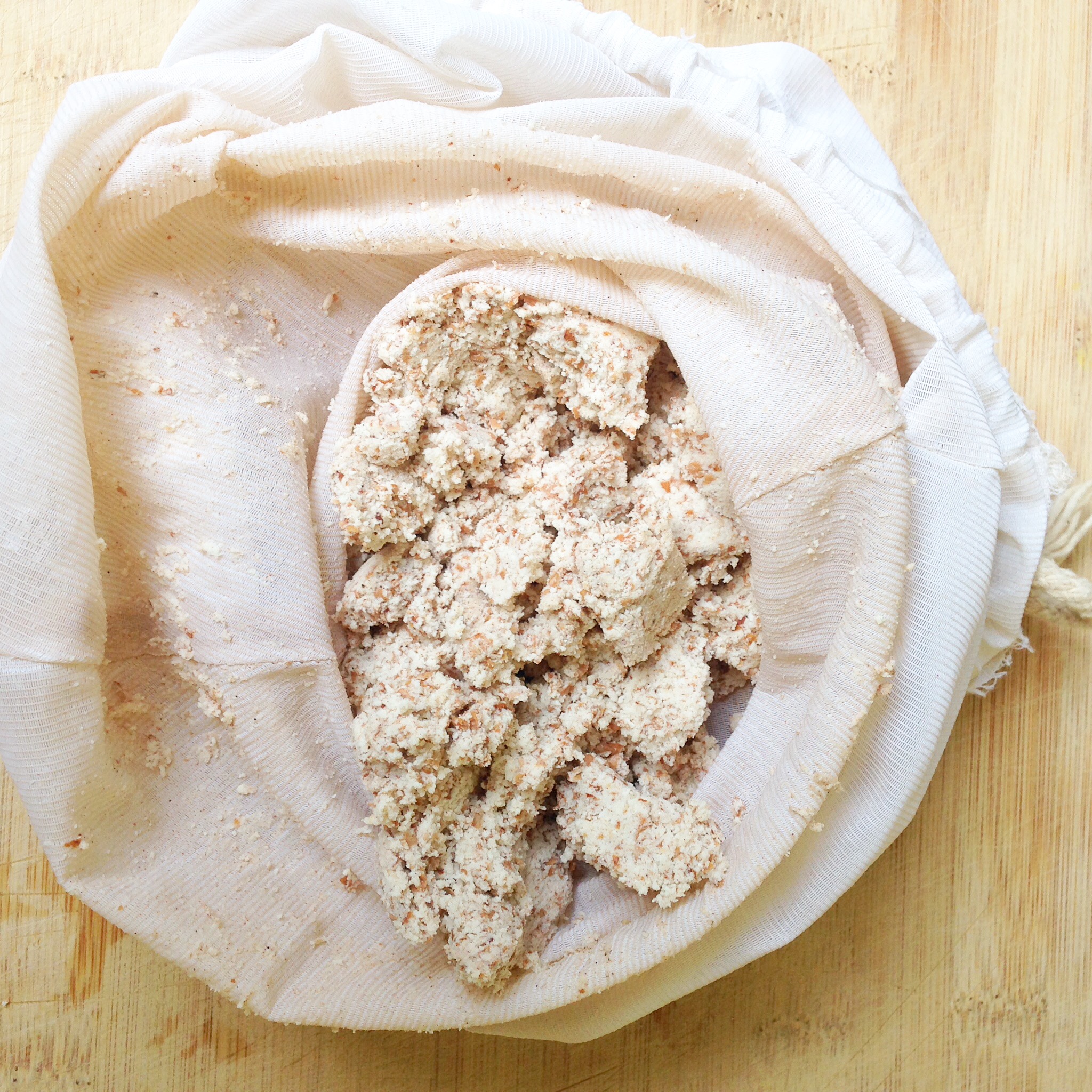
What you have left over after straining off the liquid is called almond pulp. In Raw food preparation we dry this out in a dehydrator to get almond flour (as opposed to store-bought almond flour, which is usually ground, blanched almonds.)

If you don’t have a dehydrator you can spread it out on a baking tray and put it in your oven on a low heat until it dries. Then process it in your blender to a fine flour. Keep in an airtight container. If you live in a very hot or humid place I recommend keeping it in the fridge. You can use this for gluten-free baking, as I do in my Banana Bread.
almond milk3

Health and happiness!

Love,
Lauren

Roasted Butternut Squash with Garlicky Spinach

12

When you first go vegetarian or vegan, it can be a bit stressful, especially if you are short of time. That’s because we’re so used to being able to ‘stick a steak under the grill’ or ‘put a chicken in the oven’ or ‘grill a chicken breast’ and so on and so forth. I got stressed about it myself when I first went fully veggie this time last year, which is why I try to come up with EASY vegetarian meals. I still have to cook meat for my husband, so it would be a hell of a lot of work if I was making highly intricate meals for me along with his meals. What I try to do is either a variation of whatever he’s having, or something simple, especially during the week when it’s all rush rush rush. But on nights like last night, he is more than happy to be part of vegetarian night because the food is so good!

I love butternut squash, I probably cook it in some variation at least once a week (by the way, speaking of butternut squash, you must try Raine’s Butternut Gnocchi!) Butternuts are high in fibre, low in calories and high in Vitamin B Complex which I need lots of for my nerve problems caused by long-term arthritis. They are also high in polyphenols (like acai berries and blueberries) which are great anti-oxidants. An all round brilliant vegetable!

Ingredients

1 butternut squash (half per person)
1 small bag of spinach
2 cloves garlic, crushed
2 tsp extra virgin olive oil
Himalayan salt

Method

Preheat your oven to 180. Cut the ends off the butternut and cut it in half, lengthways. Place it on a baking tray and bake for about an hour.

Take it out the oven after an hour and remove the seeds with a spoon – they should come out really easily now – and throw them away. Drizzle a little olive oil and salt over it and put back in the oven for half an hour.

9

Meantime, cook the spinach by heating 1 tsp of the oil in a saucepan. Once it’s hot, add the garlic and cook for 30 seconds, then add the spinach, in small batches, along with some salt. It wilts to nearly nothing so a whole bag will end up just about filling the holes of the butternut. It shouldn’t take more than five minutes (should be less) for the spinach to be ready. Leave to the side, remove the butternut halves from the oven and fill the holes with the spinach. Serve on its own or with any accompaniments you choose. I served it with my vegan falafel, homemade tahini and some avocado.

14


Peace and Love!
Lauren

Basil Pesto

IMG_0007

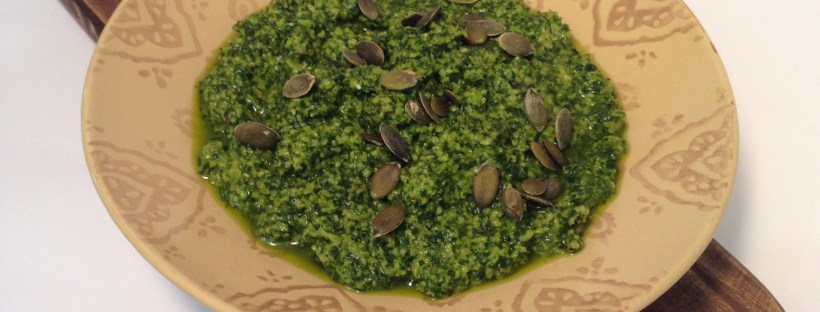
This is my dairy-free version of pesto (traditionally you would add parmesan,) and using a combination of cashews and sunflower seeds makes it more economical.  If you have pine nuts, feel free to use them! If you have a nut allergy you could replace the nuts with more seeds.
This will keep in a jar in the fridge for about a week, or you could make a big batch when you have lots of basil and freeze it in smaller portions. I often freeze sauces in an ice tray, and then put the cubes into a freezer bag. That way you can just defrost a few cubes at a time, instead of the whole lot.

I’ve given alternatives in case you feel like a change, or if you don’t have the correct ingredients on hand.

Ingredients

80g fresh basil leaves (or replace 40g with fresh spinach)
1/2 cup raw cashews (or macadamias)
2 tbsp raw sunflower seeds (or pumpkin seeds)
2 cloves garlic
1/2 tsp Himalayan salt
1 tbsp nutritional yeast
juice of 1 lemon, or to taste
1/2 cup extra virgin olive oil

Method

I like my pesto chunky so I make it in a food processor, but you could do it in a blender if you prefer it smoother. Simply throw in all the ingredients and pulse until you have the desired consistency. As with all our dips & sauces, taste for seasoning and adjust if necessary to the way you like it!
I find that this makes the perfect consistency for using as a dip or spread, but if you want to use it as a sauce for gnocchi for example, add a few drops of water just to loosen it up a bit.

Health and happiness!

Love,
Raine

Chai Coconut Milk Chia Pudding

chai chia pudding2

That might sound like a mouthful, and it is… a mouthful of deliciousness and health! “Chia” is the ancient Mayan word for “strength” and these little seeds were prized for their ability to provide long-lasting energy. They provide high nutrition for low calories (almost all of their carbohydrates are in the form of fibre) so this is a great food if you’re trying to lose weight. They are high in protein, fibre, Omega 3 fatty acids, calcium, magnesium, phosphorus and antioxidants.

You can sprinkle chia seeds over your breakfast or add them to smoothies, but my favourite way to eat them is by making chia pudding. When you soak these little nutritional powerhouses in liquid, they swell and absorb the liquid. The result is a creamy and delicious pudding. Great for breakfast or dessert… and who doesn’t love dessert for breakfast?!

I prefer to grind my spices fresh in a coffee grinder as the flavour is much more intense, but you could use pre-ground spices if you don’t have whole spices or a coffee grinder.


Ingredients

1 stick of cinnamon (3/4 tsp ground)
1 star anise (1/4 tsp ground)
the seeds of 8 green cardamom pods (1/2 tsp ground)
about 1/5 of a whole nutmeg (1/4 tsp ground)
1/4 tsp Himalayan salt
1 – 2 tbsp raw honey or organic maple syrup
2 cups coconut milk (I make my own but you can use an organic tinned one which contains only coconut and water)
90ml chia seeds
60ml hemp seeds

Method

Firstly, grind the spices until you have a fine powder. Place them in a bowl with the honey and salt and a few drops of the coconut milk. Use a whisk to dissolve the honey, and then add the rest of the coconut milk. Add the chia and hemp seeds and whisk well so that the seeds are well distributed through the liquid.
I normally leave it overnight in the fridge, stirring once before I go to bed. If you’re in a hurry, you could stir every hour or so and it should be ready in about 4 hours.

I layered mine with fresh mango, banana, brazil nuts and goji berries for a delicious and energising breakfast.

Health and happiness!

Love,
Raine

Raine’s Favourite Green Juice

green juice
Drinking green juice on an empty stomach when you wake up gives you a boost of nutrients that will give you energy for the day, heal your cells and fight off free-radicals (the nasty stuff that causes cancer.) I drink one just about every morning, and on the days that I don’t have a juice I can really feel the difference.
If you’ve never had a green or any vegetable juice before it may take you some time to get used to it, but I promise it will be worth it. If my husband can get used to it (and now even love it) then anyone can! On a hot summer morning it’s super refreshing, and in the winter months it gives your body everything it needs to fight off colds and flu.

The general rule is that you should juice your veg but eat your fruit (as is or blended in a smoothie.) This is because fruit is high in natural sugars so you need the fibre in the fruit to prevent a blood-sugar spike.
However, if you’re new to juicing, I recommend that you start off with a little bit less of the really strong tasting stuff (spinach, kale, broccoli etc) and use more of the easy-drinking vegetables (carrot, beetroot, celery, cucumber) along with fruit (apple, pineapple, grapes etc.) As you get used to it you can increase the vegetables and decrease the fruit. After all, what’s the point of making one really strong juice and then never having another?!
Over time you’ll start to enjoy the taste of the vegetables and will only need half an apple, or eventually none at all.

I make juice with whatever fresh vegetables, fruit, herbs and spices (fresh ginger or turmeric, sometimes even chilli!) I have available. I like to mix it up. This is one of my favourite combinations – I love the liquorice flavour of the fennel and it goes really well with the lime and lemongrass.

Ingredients (serves 2)

A big handful of kale or spinach
6 baby fennel or 1 large bulb
3/4 of a large English cucumber
2 limes
a knob of ginger (not too much if you’re not used to it)
a knob of turmeric (optional – great anti-inflammatory properties)
a stick of lemongrass
a handful of white grapes, or 1 – 2 apples
a few leaves of mint

Method

I highly recommend a slow, masticating juicer over a centrifugal juicer, as it preserves nutrients and gets maximum juice out of your ingredients, especially when it comes to leafy greens. (But juice from a centrifugal juicer is better than no juice at all!)
The money you spend on a quality slow juicer, such as an Oscar or Hurom, will be well worth it and will save you in doctor’s bills in the future.

When juicing in a slow juicer, always do your leafy greens first and don’t try to shove too much in at once – give the machine a chance to do its thing.

You can also check out Lauren’s Favourite Green Juice.

Health and happiness!

Love,
Raine

Raw Caramel

photo.PNG

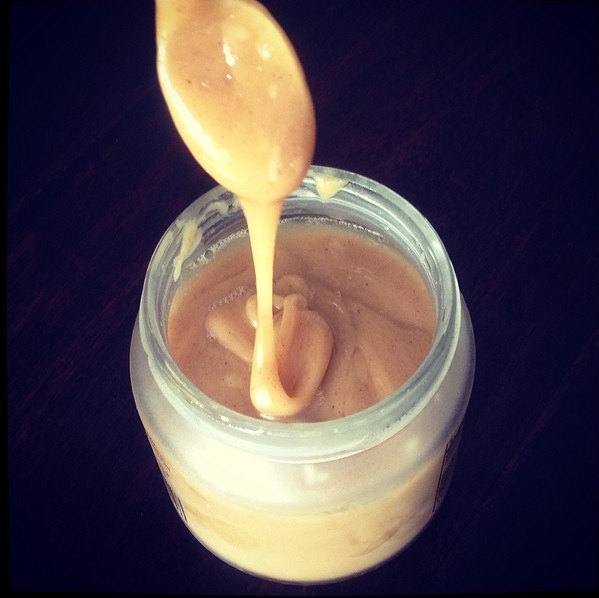
Creamy, gooey, sweet caramel… it must be unhealthy, right? Not this one! And it’s super easy to make too – no more standing over the stove forever to get your caramel just right. This goes wonderfully with No-fry Chocolate and Maca Pancakes, drizzled over slices of apple, as a centre for raw chocolates or just by the spoonful!
I like to make up a batch and keep it in a glass jar for whenever I might need it. Keep refrigerated in very warm weather as it will melt and separate, otherwise in the pantry is fine.

Ingredients

50g organic virgin coconut oil
70g raw almond butter
100g runny raw honey or 85ml organic maple syrup
1/2 tsp vanilla powder
1/4 tsp Himalayan salt

Method

Place all the ingredients into your blender and blend for a couple of minutes. You want everything to melt together into a creamy consistency, and the mixture will change colour as you do this. It’s important to blend for long enough, as opposed to just mixing everything together, to get the right consistency. If it doesn’t look right yet just keep on blending!

Health and happiness.

Love,
Raine

No-fry Chocolate and Maca Pancakes

Choc Maca Pancakes

I can’t think of anything better for Sunday breakfast than a stack of pancakes! And with this recipe they’re completely guilt-free.

This is basically a variant of the Plain Buckwheat Pancakes – I’ve added raw cacao and maca for a delicious malted chocolate flavour. Maca gives you increased energy and is said to help relieve the symptoms of PMS. It has a malted flavour which pairs very well with raw cacao.

Both maca and cacao are aphrodisiacs, so why not start practicing this recipe now for Valentine’s Day?  😉

I find it tedious to stand in front of the stove frying up batches of pancakes, so I decided to try baking them and it worked really well! Of course you also have the added benefit of not having fried them in oil – while coconut oil is the best choice for frying, oils are always healthiest in their raw state.

In this version I used almond flour simply because I have so much (as a by-product of all the almond milk I make) but you could substitute it with buckwheat flour, as in the original recipe.

Ingredients (this makes enough for my husband, my toddler and I – about 12 pancakes)

4 tbsp flax seeds, ground in a coffee grinder (you could also use chia seeds)
150ml water
1 cup almond flour
1 heaped tsp aluminium-free baking powder
1/4 tsp Himalayan salt
3 tbsp raw cacao powder
1 tbsp maca powder
1/2 tsp organic stevia leaf powder (or 1 tbsp organic maple syrup or raw honey)
1 1/2 ripe bananas, mashed with a fork to a puree
1 cup almond milk or other dairy-free milk

Method

Preheat the oven to 180 C.
Combine the ground flax and water to make your flax “eggs.” Refrigerate for 15 minutes while you make the rest of the batter.
Sift together the flour, baking powder, salt, cacao powder, maca powder and stevia. Add the banana and almond milk and use a whisk to combine well. Add the flax “eggs” and whisk again. The flax is quite gluey so make sure you get it mixed in really well.

Line a large baking tray with baking paper. Place a heaped tablespoon of the batter onto the paper and use the spoon to spread it out into a neat circle, about 1 – 2cm thick. Repeat with the rest of the batter.
Bake for about 20 – 30 minutes until they have risen, browned and are cooked through.

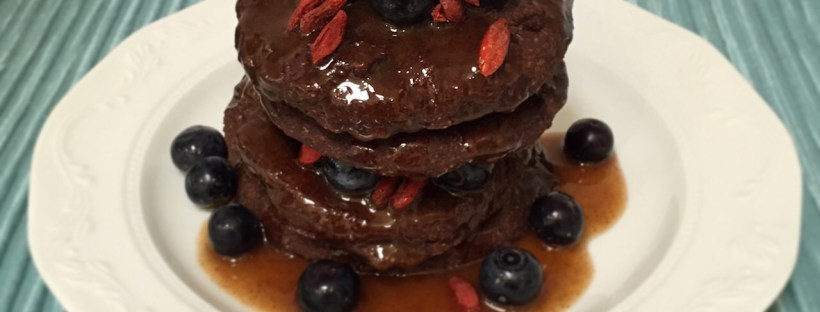
I served these with fresh raspberries, blueberries, gooseberries, pomegranate and my Raw Caramel.

Health and happiness!

Love,
Raine

Garlicky Green Beans

green beans

You may not think so because of their vibrant green colour, but green beans (or string beans) are very high in carotenoids (what you usually expect from orange or red veggies like carrots and tomatoes.) The expected orange or red is hidden by exceptionally high levels of chlorophyll. Carotenoids help to prevent cancer and are also important for heart health. Chlorophyll has many benefits, one of which is promoting iron levels. Green beans are also rich in silicon, which is important for bone health and the formation of connective tissue.

Health benefits aside, they are one of my favourite vegetables and can be prepared in many different ways. This is one of the quickest (and most delicious!) ways I know to prepare beans. I made this as an accompaniment to my Creamy Porcini Pasta last night.

Ingredients

75ml olive oil

juice of half to a whole lemon

4 big cloves of garlic, finely chopped

Himalayan crystal salt and black pepper to taste

350g green beans

Method

Combine the olive oil, juice of half a lemon and garlic to make a dressing. Blanch the beans in rapidly boiling water for just a few minutes until they turn a vibrant green. Don’t over cook them! They must still have a bit of a bite. Strain the water off the beans and then immediately toss them in the dressing. Season to taste and add more lemon juice if necessary (I like a lot of lemon.) These can be served hot or left to marinate and served at room temperature.

Love,

Raine